Say goodbye to all the gear and currency you’ve spent hours and hours (and hours) farming for in Destiny, because the sequel won’t let you transfer any of it over.
In a blog post today, Bungie announced that in order to make the second Destiny game feel like a true sequel, Destiny 1 players will not be able to bring any of their earned items or abilities over to the new game.
Sequels represent the start of a new adventure for every player, with new worlds to explore, new stories to tell, new powers to acquire, new loot to earn, and much more. This led us to a decision that would enable us to serve both the game and the player’s best interests: Destiny 1 power, possessions, and Eververse-related items and currency will not carry forward. They will, however, remain accessible to you in Destiny 1.
This was previously rumored by Kotaku, whose sources also noted that Destiny’s sequel will be coming to PC as well as Xbox One and PS4.
The team won’t completely forget about players who’ve spent hundreds or even thousands of hours with their Guardians, though. If you’ve reached level 20 on a Guardian and finished the Black Garden story mission, you’ll be able to carry over that Guardian’s class, race, gender, face, hair and marking selections. Additionally, you will receive “honors that reflect your Destiny 1 accomplishments.”
We believe this is the best path forward. It allows us to introduce the major advancements and improvements that all of us expect from a sequel, ensuring it will be the best game we can create, unencumbered by the past. We’re looking forward to sharing more details with you later this year for how we will honor your legacy in the future.
The Destiny sequel has yet to be officially announced but is expected to release in late 2017.
In the meantime, Destiny will be receiving one final event called Age of Triumph, which will be revealed March 8.
Whatever happens in Splatoon 2’s story, it’ll be a product of the game’s community.
Nintendo recently added a new section to the upcoming sequel’s website, called “Squid Sisters Stories.” That’s a reference to Marie and Callie, the pop idol duo at the center of Splatoon’s in-game “Splatfest” events.
Read Also: ‘Fallout’ becomes a board game in ‘Wasteland Warfare’
Before we get to the site update and how the original game will influence the sequel, it’s important to understand what Splatfests are.
Splatoon is a competitive multiplayer game, and Splatfests were limited time events in which players chose between two sides. It was always something simple: Cats vs. Dogs, Art vs. Science, Messy vs. Tidy.
The labels ultimately didn’t matter inside the game, beyond giving the community competing banners to unite under. At the end of each Splatfest, each team earned a score based on a combination of overall popularity (i.e. how many players flocked to each banner) and win percentage, with the higher score nabbing a win.
In every Splatfest, Marie and Callie split up to represent each team. But for the final Splatfest, the Squid Sisters were the banners players flocked to: it was Marie vs. Callie. The event ended on July 22, 2016 and Marie was crowned the winner.
That was the end. Or so it seemed.
Now, the newly updated Splatoon 2 website features an all-text “Prologue” that directly references the result of that final Marie vs. Callie Splatfest. Here’s the relevant bit:
The showdown of Callie versus Marie ended in victory for Marie, but there was no ill will between the two. The girls left the studio arm in arm, smiling and laughing as they always had. The bond between them would continue, unbroken, for years to come.
There’s one more line after that: “Or so it seemed at the time….”
This prologue is obviously setting up the story in Splatoon 2. What’s surprising is the way the final Splatfest, a real-life event, is woven into the fictional story. I can’t think of any other case where a game featuring live elements used the results of an in-game event to influence the continuing story.
To see this coming from Nintendo, a company that has traditionally been slower to embrace industry trends — in this case, live games — is even more surprising. There’s plenty more to be revealed about Splatoon 2, but this very cool twist should go a long way toward keeping fans of the first game invested in the sequel.
Steve Jobs once said that “Great things in business are never done by one person; they’re done by a team of people”. And Little Heroes (Pequenos Heroes), the first Venezuelan 3D animation feature film, is a classic example of this. Inception of this project started in the year 2012 when the Venezuelan production company Orinoco Films decided to make a movie about the feats of Simon Bolivar, a South American hero. Director Juan Pablo Buscarini, historian Carmen Bohorquez and screen writer Enrique Cortes formed a team and rigorously started working on it.
Just like any other competent leader, director Buscarini wanted the best for his movie. Instead of limiting themselves to the boundaries of South America, the team members reached out to the world. Their hard work paid off when they went on to hire 3D art and animation services from the experts across eight countries, which allowed them to have the best people working for Little Heroes. India made it to their list along with Argentina, Venezuela, UK, USA, Serbia, Spain and Hong Kong.
But, the breathtaking moment for GameYan (the brand of Yantram Studio) came when it was selected to be a part of the movie’s production. The challenge was tough but, the horizon of opportunities it showed to GameYan’s team propelled them to give their best. Without any delay, the game development production studio put their best foot forward and engaged 25 highly-skilled professionals. The team successfully completed 3D Character Development (3D modeling, texturing and rigging and simulation) of around 250+ characters.
Feature film Production of Little Heroes has finally come to the end, and the entire cast and crew is eagerly waiting for its premiere. What makes it special does not just include the fact that the movie stars the very famous Patricia Velasquez for the voice of Pilar, one of the protagonists. The movie stands out in technical terms too as it is the first South American animated movie which has used MoCap technique. The MoCap animation for the movie has been done by Centroid.
GameYan – Art and Animation Outsourcing Studio not only feels proud to be associated with the movie, but also wishes the very best for it. For all those who are equally eager for our ‘Little Heroes’, here’s a short synopsis of the adventure that awaits them.
Little Heroes (Pequenos Heroes) – The Story
Arturo, Tico and Pilar are three children who come from different backgrounds. On one fine morning, when the day seemed as usual bright and exuberant, the three discovered a secret. For these brave children, size didn’t matter. It was more important for them to fight for freedom. They decide to handover the secret to Simon Bolivar and help him defeat the king and his army. Amidst all the adventures, a great bonding between the kids takes place.
Credits:
Production Studio – Orico Films & Vill Del Cine
Movie Director – Pampa Films 3D Character Development Studio – GameYan Studio – (Brand of YantramStudio)
Supervising Studio – It’s Aliveee
Editing – Assembling – MalditoMaus
Mocap Animation : Centroid
Teaser / Trailer – Cartoon Animation Movie – 2017:
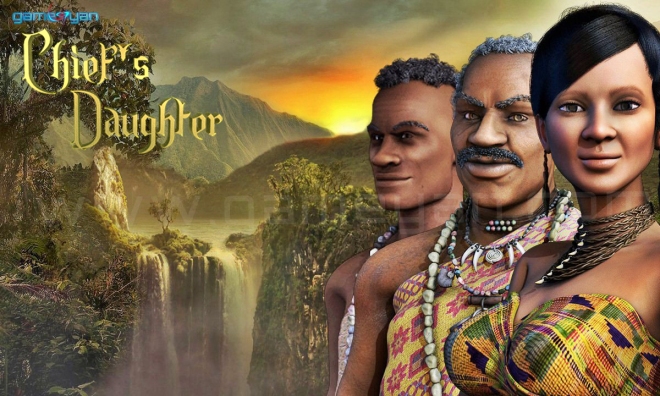
GameYan studio develops more then 250+ 3d semi-cartoonish characters (Modelling, Texturing, Shading, Rigging, Simulation) human and animals in Venezuela’s first 3d animated featured film.
GameYan play base role in this animation movie production pipeline where entire feature film production based on our 3d art outsourcing development.
Studio Involved in Movie Production from 8 countries (Argentina, India, Spain, Serbia, Hongkong, Venezuela, UK, USA)
Production Studio – Orico Films & Vill Del Cine
Director / Editing – Assembling – Pampa Films
3D Character Development Studio – GameYan Studio – (Brand of YantramStudio)
Supervising Studio – It’s Aliveee
Mocap Animation : Centroid
GameYan Studio Intro:
GameYan is movie and game art outsourcing studio in India provide 2d and 3d model, texture, shading, rig and animation for all games for mobile, PS, Xbox, Desktop, video, PSVR, Facebook and feature movie film animation, cartoon series, TV commercial.
Post Production for any animated movie is a linear process wherein every minute change is done with concentration and perfection. As the term itself says “Post” meaning that it will perform after the first two phases have done their job accurately with finesse.
The frames created for an animated film is then passed to the editor room where the frames of the video are bifurcated. Unwanted frames are cut down and the remaining frames are properly organised in a sequence which is known as rough cut or block editing.
While editing, the sound is considered the most important because the charm that the music creates with each frame. When frames are cut down, the flow of sound should not be affected rather it should be in flow.
During the frames editing, frames which you need or not needed become the most important segment of discussion. Sometimes, the frames which are not in perfect resolution may be reframed. From start to end, each and every frame is a point of anticipation. May be the beginning is not alluring or the end does not attract the movie lovers, all these points are considered. Lastly, all these frames are organised in sequence which completes the process.
Sound Design
The sound design includes background scores and voice hovers which act as a pacemaker in any animated film. To keep holding the audience where story plays a crucial role, sounds creates an impact on them.
Editing sound leads to recheck with the dialogue line. They make a note of lines which requires a re-take. Sometimes, the words get overlapped with the background score and needs to be clean using the sound editor. This process is known as ADR.
After the sound editing is up to the mark, the suitable music is bought online or free tracks from premium packs are downloaded that flows with the story line.
The foremost point is budget and for any business, creating an original track flowing with the story line can be expensive and time consuming to produce which may not be considered as fruitful.
Visual Effects
For the most part, Visual Effects encompasses everything from painting out cables, rig removal, digital replacing signage, blending two takes together, and generally anything that, if done properly, is completely invisible, yet very important. Only when the budget is more, many creative things can take place and more detailed visual effects can be added.
The time it takes and the cost of the software to produce VFX can mean it is a shelved to ponder for most people looking to make attractive video.
Audio Mixing
Once the sound has been edited, the dialogue more clear and the music vibrating the wires, it’s the job of the sound designer to bring all these sound elements into harmony with each other. Sound mixing can be tangle. You might be doing a 7.1 theatrical mix (that’s seven speakers and a subwoofer), but in the main, business video or web videos will be mixed down for stereo.
Dynamic range, or the difference between the quietest parts and the loudest parts, is another issue when mixing audio. Theatrical mixes often have gamut because they can rely on a controlled listening environment (i.e. a movie theatre). However, with mixes for TV advertisements or online video the range has to be low.
Once the sound is mixed, the sound part of a video is completely done.
Colour Correction/ Grading
To start with the process, colour grading includes the blending of white with the different colour shades. This sort of blending creates a balance between frames making the resolution of gif image clear and beautiful.
Applying an appropriate colour grade to the video that has the potential to leverage its viewpoint. The look could be everything from the sickly green of The Matrix, to the bleach bypassed desaturated look of Saving Private Ryan.
At the highest level, a very expensive monitor is needed to properly judge the colour and the looks. However, without the world’s best monitor, the best course of action is to colour correct the video and then watch it on as many TVs and monitors as possible and then use that information to apply any further tweaks.
Once that’s done, you combine the final sound mix and the final colour correction / grade and the video is finished.
Here comes an end to post production of an animated movie and game.


 GameYan Studio